
Do India’s reasons for dropping Mohammed Siraj in New Zealand Tests stand up to scrutiny?
The stories on the opening day of the two-match Test series between New Zealand and India were dominated by the names missing from the team sheet rather than those on it. Ravindra Jadeja and Mohammed Siraj, with a combined experience of 139 Tests, were deemed surplus to requirements for the playing eleven.
A determined batting effort helped India call the shots in Wellington, but a docile pitch and a spirited second-innings performance from the host meant the teams shared the spoils.
Day 1 of the second Test in Christchurch followed a similar template. India did opt to change the bowling attack that failed to pick up 20 wickets last time. However, the management handed Gurnoor Brar a debut Test cap instead of drawing on the experience of a bowler with 144 Test wickets.
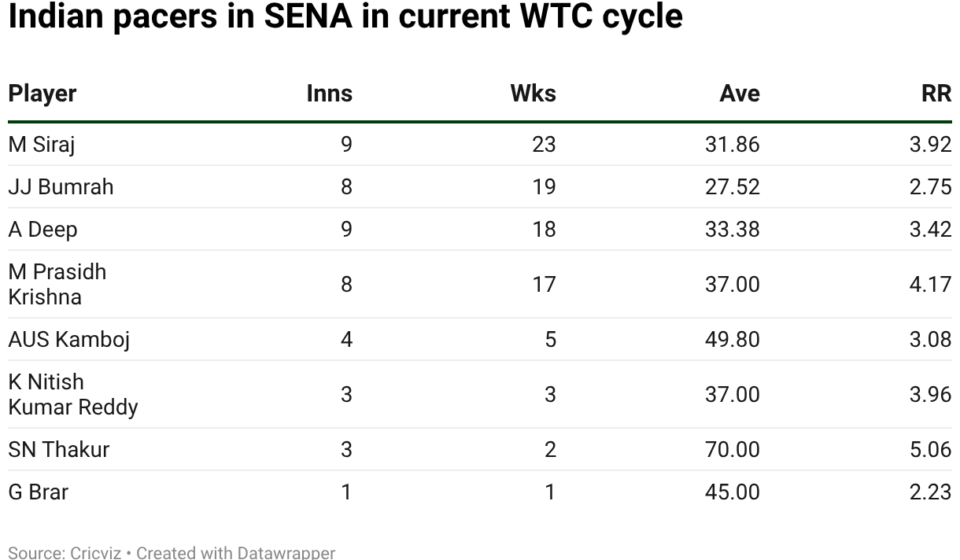
No Indian pacer has taken as many Test wickets as Siraj (44) since the start of the current World Test Championship cycle. Only Mitchell Starc (73) and Josh Tongue (64) have taken more across all teams. Narrow the numbers down to SENA countries, and Siraj still leads the charts among his compatriots with 23.
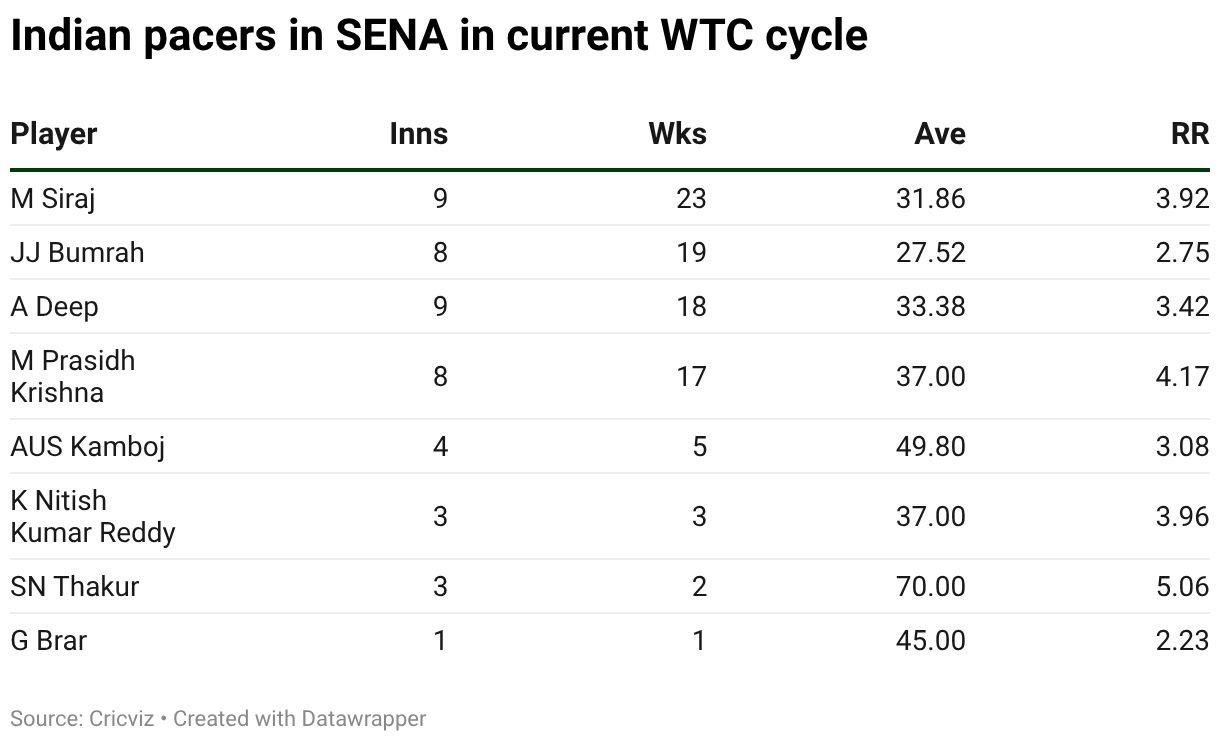
The wickets column hasn’t swelled simply because of the volume of overs bowled. Siraj also has the second-best bowling average among Indian speedsters, behind only Jasprit Bumrah. The Hyderabad quick has consistently stepped up as the leader of the attack whenever the team has needed him, with the most recent example being the away series in England, where he finished as the top wicket-taker with 23 scalps.
“When Jassi bhai isn’t around, then you get that confidence that you need to shoulder extra responsibility and I enjoy that. I don’t take extra pressure and try to keep things simple,” Siraj had said during the England tour.
The New Zealand series was a critical one for the Indian pacers. Bumrah was the only bowler with prior Test experience in these conditions. Siraj, too, was making his first trip across, but his body of work in international cricket was expected to be Bumrah’s biggest ally. The script, however, has played out very differently.
One argument for leaving Siraj out is that he is a seam bowler who utilises the surface to move the ball either way. Conditions in New Zealand are not conducive to surface-induced movement, with pacers relying much more on movement in the air to trouble batters. While it is true that Siraj remains India’s best ‘seam’ bowler, bowling more deliveries that move off the surface than anyone else, the suggestion that he does not swing the ball as much is unfounded.
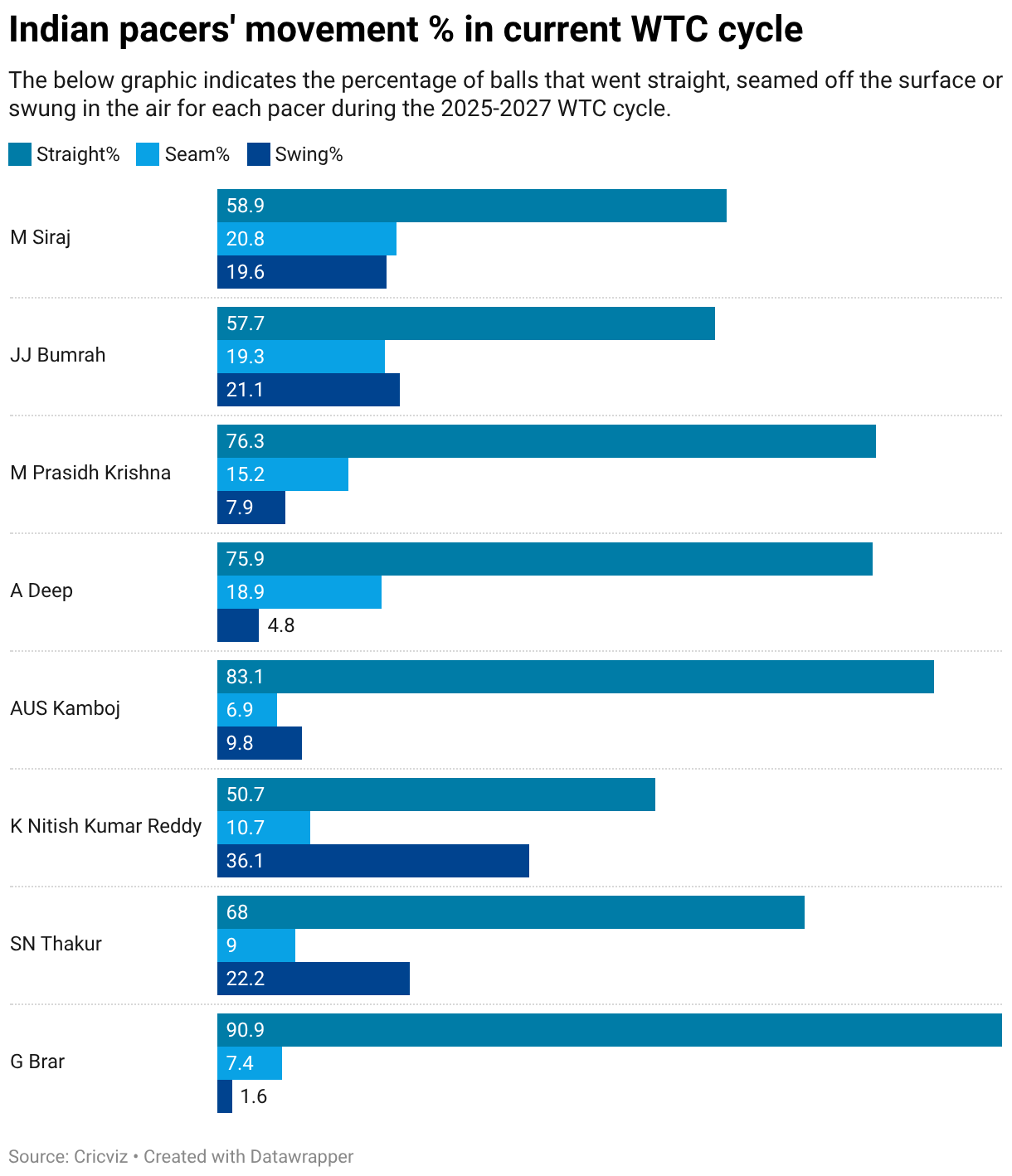
In the ongoing WTC cycle, Siraj has got almost an equal number of deliveries to swing (19.6 per cent) as he has to seam (20.8 per cent). This percentage of deliveries that have swung is much higher than that of bowlers who have been picked ahead of him in New Zealand. The caveat is that some of them have played only a few matches and have been made to bowl on flat tracks.
Another criticism of Siraj is that his effectiveness diminishes as the ball gets older. India’s batting coach Sitanshu Kotak also hinted at this during the press conference after Day 1 of the first Test. “I don’t think dropping Siraj was a wrong decision. This is just the first day. We don’t pick a team only for day one, but also for days two, three and four,” Kotak had said.

Siraj has consistently managed to hit the right lengths with the older ball whenever he has been asked to do the job. Despite the lack of zip that comes with a brand-new ball, he averages 36 and 33, respectively, across the good and hard lengths (only includes matches where tracking data is available).
In fact, since 2025, Siraj has been India’s leading wicket-taker with the old ball (ball age above 30 overs), with 18 wickets in 21 innings. Prasidh Krishna, a hit-the-deck bowler who is most effective with the older ball, has fared only marginally better than Siraj in terms of bowling average.
With Siraj not trailing his counterparts in any bowling aspect, the question remains: why the reluctance to play him? The team management has sidestepped the question, claiming it is doing “what’s best for the team”. For now, the selection appears to be an attempt to shore up the batting at number nine rather than improve the bowling. Four more days of action in the second Test will reveal whether the management is vindicated or whether this becomes another case of a golden opportunity let slip.
(All stats until November 27, 2026)
Published on Nov 28, 2026