
Anand on Gukesh vs Sindarov matchup after Game 3: Neither player tested yet, expect intensity to pick up
The Salesforce FIDE World Chess Championship between D. Gukesh and Javokhir Sindarov has reached its first rest day after three games. Both players have shown themselves to be well prepared.
FIDE World Chess Championship 2026 — Match Centre and Highlights
Game 1
Sindarov opened with his King’s pawn (1. e4) and Gukesh replied with the Berlin Defence, an opening that is famous for being very tough to crack. It is important for White to have unusual ideas to pose problems for his opponent. Sindarov opted for the endgame and had a rare idea ready.

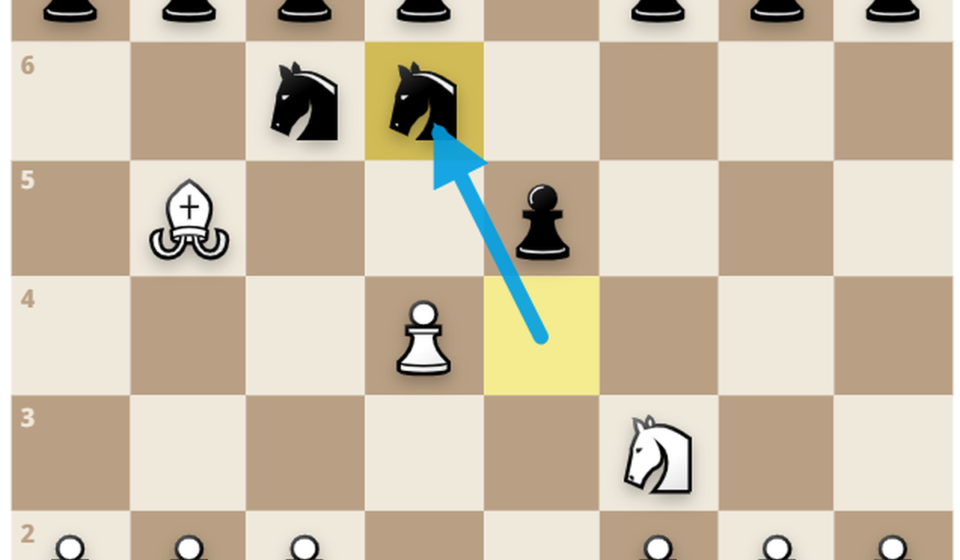
With 5. Ne6, Gukesh opted for the Berlin Wall variation of the Berlin Defence in the opening game.

With 5. Ne6, Gukesh opted for the Berlin Wall variation of the Berlin Defence in the opening game.
Gukesh started to improvise early – moves like 14. a5 17. Bb4 and 19. c5 23. Nxe5 showed him calculating and working hard over the board. Sindarov responded with equal intensity and when he found 29. Nd3 and 31. Rh5. Gukesh had to find 31. Bc3 in some time pressure and then the draw ensued. Amusingly, Sindarov showed himself unfamiliar with the rules in claiming a draw leading to an amusing encounter with the arbiter, but this was remedied right away. An intense and high class game.
Game 2
Gukesh opened with the Queen’s Pawn (1. d4) and the revelation came on move 3 with the London system. An opening which has exploded in popularity over the last decade. An opening suited to the World Championship due to the need to cover all the options for both sides. Sindarov was extremely well prepared — he chose a line which hasn’t been in the spotlight recently. With 5. Nc6 and 6. Be7 and then the surprising 7. Qb6, he showed that he had a new twist ready.
Gukesh responded with 9. Bxe5, but then it became clear that Black had solved his opening problems. On move 15, Sindarov clamped on the centre with f5. Gukesh spent a lot of time but didn’t find anything better than 16. f3 and 17. Be5, which allows Black to claim a repetition a few moves later. And yes, this time, the players knew how to make a draw!

Sindarov gained control of the centre with 15. f5, after which Black could not claim a winning position.
Sindarov gained control of the centre with 15. f5, after which Black could not claim a winning position.
Game 3
Sindarov repeated 1. e4 and Gukesh went for the same Berlin Defence, but suddenly deviated from the endgame on his 5th move and went for an old line with 8. Nf5. His 15th move exchanged Queens and he had equalized easily. The opposite coloured Bishops were the dominant factor. When Sindarov played 29. f4, it briefly looked problematic for Black. Gukesh, however, played very accurately and especially 33. c5 and 34. d4 solved all his problems and the game ended in a draw as well.

The opposite coloured Bishops (White for Sindarov and Black for Gukesh) were the dominating factor in the third game.
The opposite coloured Bishops (White for Sindarov and Black for Gukesh) were the dominating factor in the third game.
I expect the intensity to pick up now.
Observations
1) Neither side has managed to put his opponent in danger.
2) The teams now have some targets to work with.
3) The players seem fully concentrated and looking for every chance, but they have not been really tested so far.
Published on Nov 27, 2026